Investing.com — Robotaxis, autonomous vehicles (AV) designed for public transportation, mark a substantial shift in the way we think about mobility, with companies like Tesla (NASDAQ:TSLA), Waymo, and Uber (NYSE:UBER) racing to create efficient, cost-effective, and scalable fleets of self-driving vehicles.
In a recent note, Bernstein analysts explored the key aspects of robotaxis, focusing on their economics, technology, and the regulatory hurdles these vehicles face.
The Economics of Robotaxis
The economic viability of robotaxis has become a central focus for investors and companies alike. Bernstein analysts believe that AVs are already competitive in terms of active miles but note that deadhead miles—those driven without passengers—remain a challenge.
“Robotaxi cost per mile is below that of the current driver model. However, if we include deadhead miles… the unit economics may still be modestly negative today,” Bernstein analysts wrote.
Despite this, the report predicts that AV costs will decrease over time, while traditional driver-based costs will likely increase due to labor and insurance inflation.
“Cost curves will diverge. AV costs will come down over time while driver model costs will likely increase,” Bernstein noted. This trend could ultimately lead to greater profitability for robotaxi operators, although Bernstein is quick to caution that “gross profit is not EBIT” due to the high operational expenses (OpEx) involved.
Tesla’s position in this market is seen as potentially disruptive, given its “significantly lower CapEx threshold to scaling” due to its vision-only approach to autonomy. If Tesla can solve autonomy with its “camera + software-first approach,” the company stands to be a low-cost leader.
Still, the electric vehicle (EV) giant is still playing catch-up with competitors like Waymo and Cruise, which have already begun operating robotaxis commercially.
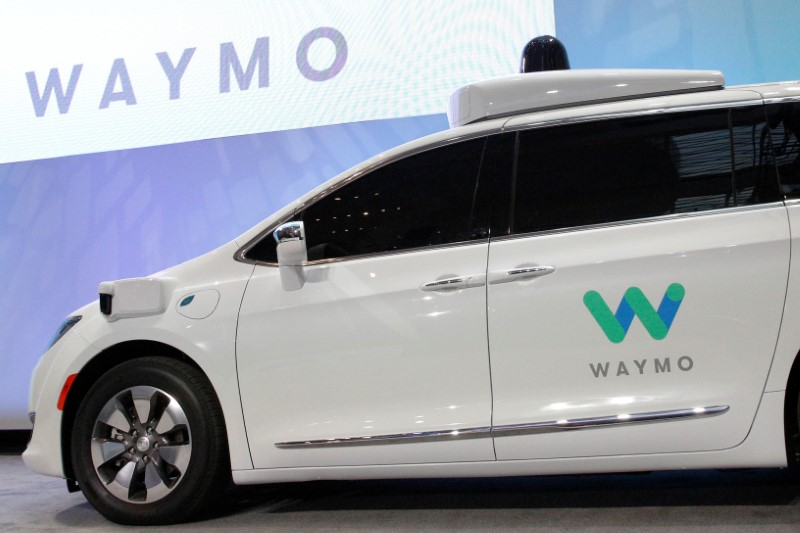
Waymo, a subsidiary of Google owner Alphabet Inc Class A (NASDAQ:GOOGL), has been working closely with regulators for over a decade, positioning itself as a leader in the space, while Tesla has yet to engage in regulatory processes at the same scale.
The Technology Behind Robotaxis
The core technology powering robotaxis is a significant point of differentiation between companies. Tesla has opted for a “vision-only system,” relying solely on cameras and software for its Full Self-Driving (FSD) platform.
In contrast, competitors like Waymo and Cruise use a combination of cameras, lidar, and radar to provide enhanced safety and reliability.
“Tesla is notable in its approach to autonomy in three ways. Firstly, they are choosing to go with a vision-only system. Pretty much everyone else—leading players like Waymo, Cruise, Baidu (NASDAQ:BIDU), and Pony.ai—[use] a combination of cameras, lidar, and radar,” Bernstein’s report states.
The report highlights the significant debate surrounding Tesla’s approach, particularly in challenging driving conditions.
“Lidar is expensive… but provides very detailed 3D mapping and, very importantly, works in full sunlight as well as total darkness at night,” the analysts point out. By opting for a camera-only solution, Tesla has reduced costs, but it also faces more significant challenges when navigating difficult environments like fog, rain, or low-light conditions.
Despite these differences, Tesla’s real-world data advantage—generated by its large fleet—could enable the company to improve its AI models over time. However, Bernstein cautions that Tesla’s current level of autonomy “is still between Level 2 and Level 3,” whereas competitors like Waymo are already operating at Level 4, meaning their cars can function without a driver under certain conditions.
Tesla’s approach contrasts with Waymo’s use of a more comprehensive sensor suite, which includes 29 cameras, five lidars, and radar, making it one of the most sensor-heavy robotaxi systems in the industry. The debate remains about whether Tesla’s cost-saving approach will be enough to compete with these sensor-laden systems.
The Regulatory Landscape
While technological advancements are essential, regulatory challenges are equally critical for scaling robotaxi fleets. Waymo has been working with regulators since 2012, gaining experience through incremental steps in California and beyond.
“Waymo started self-driving trials in 2012… In 2017, it started doing those trials without people,” Bernstein notes, showing how Waymo has carefully navigated the regulatory hurdles involved in achieving commercial operation.
Tesla, on the other hand, has been slower to engage with regulators, which may delay its ability to scale its robotaxi operations.
The Bernstein analysts point out that Tesla has “not applied to test without drivers or started the process for commercial robotaxi license[s].” This lack of regulatory engagement could become a major bottleneck for Tesla’s ambitions in the autonomous vehicle space, despite its technological advancements.
The regulatory landscape is also fraught with risks. Recent issues, such as Cruise’s license suspension in California following a high-profile incident, highlight the seriousness with which regulators view robotaxi operations.
Tesla’s absence from deep regulatory involvement could hinder its ability to move as quickly as competitors like Waymo and Cruise, who have long-standing relationships with regulatory bodies.
